
Did you know that we design some of our products to assist in your little one's development? With the help of an occupational therapist, we purposefully create additions to our catalogue that aid in either motor, sensory or emotional development. Together, in our blog posts, we explore how our handmade treasures support your baby's growth and development. From sensory stimulation to motor skill mastery, our blog shares insights into our products and practical tips on how our products can enrich your little one's journey.
Not just an accessory - a necessity
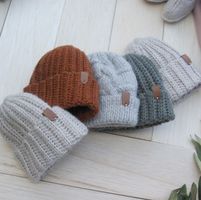
Dressing a newborn in a little beanie might seem like a simple, cute finishing touch—but it plays an important role in keeping your baby warm and comfortable, especially in those first delicate weeks of life.
Newborns lose heat much faster than adults because their bodies are still learning how to regulate temperature. They have a larger surface area compared to their body weight, very little fat for insulation, and an underdeveloped ability to maintain a stable body temperature. One of the biggest areas where heat is lost is the head, which is why covering it can make a real difference. In fact, research in anatomy and physiology shows that a significant portion of heat loss in infants can occur through an uncovered head, particularly in cooler environments such as a cool winter of windy outside environment.
This is why healthcare guidelines, including those from the World Health Organization, emphasise the importance of keeping newborns warm immediately after birth. Alongside skin-to-skin contact and warm clothing, a soft beanie helps support temperature stability and reduces the risk of hypothermia—a condition that can place stress on a baby’s breathing, blood sugar levels, and overall adaptation to life outside the womb.
In neonatal care settings, even small, simple interventions matter. Studies have shown that measures like head covering can help reduce cold stress in newborns, especially in premature or low birth weight babies who are even more vulnerable to temperature changes. It’s one of those gentle, low-effort ways to support a baby’s physiology during a big transition period. At Hedgehogs and Daises, we donate beanies to entities working with infants such as NICU units and NICU ambulances in Cape Town.
Of course, balance is key. Babies can overheat just as easily as they can get cold, so beanies should be breathable, lightweight, and used thoughtfully—especially indoors or in warmer climates. This was part of the thought process to produce two types of beanies – one preferably for cool outdoor environments (crocheted beanies) and one for warmer indoor environments (knotted beanies).
READINGS:
World Health Organization. (1997). Thermal protection of the newborn: A practical guide (Online) [Accessed 15/04/2026].
Lunze, K., Bloom, D. E., Jamison, D. T., & Hamer, D. H. (2013). The global burden of neonatal hypothermia. The Lancet Global Health [Accessed 15/04/2026].
Tortora, G. J., & Derrickson, B. (2014). Principles of Anatomy and Physiology. Wiley (Online). [Accessed 15/04/2026]

Swaddling
Why swaddling your baby is important
Swaddling is a time-honoured practice used to help newborns feel secure as they adjust to life outside the womb. By gently wrapping a baby in a light blanket, swaddling mimics the snug environment of the uterus, which can promote better sleep, reduce crying, and help regulate a newborn’s immature nervous system. It is also particularly effective in limiting the startle (Moro) reflex, which can otherwise wake infants suddenly and disrupt rest. Among other benefits, swaddling has shown to also assist in pain management and temperature regulation for infants.
Research suggests that swaddling, when done correctly, can support longer and more restful sleep cycles, which are essential for growth and neurological development (Franco et al., 2005). However, it is important that swaddling allows for natural hip movement to reduce the risk of developmental issues such as hip dysplasia, and that babies are always placed on their backs to sleep to lower the risk of Sudden Infant Death Syndrome.
Research shows that allowing infants to keep their hands near their mouths, whether through swaddling (or natural positioning), supports early hand-to-mouth coordination, sensory awareness, and self-soothing, which are foundational for later developmental milestones such as feeding, oral exploration, and fine motor control.
Swaddling is generally recommended during the newborn stage and can be used up until around 8–12 weeks of age, or until the baby begins to show signs of rolling over. At this point, swaddling should be discontinued to ensure safe sleep practices. As every baby develops at their own pace, caregivers should watch for these milestones and transition to other sleep methods when appropriate.
At the heart of this philosophy are our stretchable swaddles. Our stretchable swaddles allow effective swaddling while allowing some movement as necessary. It provides a small cocoon-like structure for the newborn as they adjust to life as we know it. This gentle flexibility supports comfort and security while still respecting the baby’s need for natural movement and healthy musculoskeletal development.
READINGS:
Addabbo, M., Roberti, E., Colombo, L., Picciolini, O., & Turati, C. (2022). Newborns' early attuning to hand-to-mouth coordinated actions. Developmental science, 25(2), e13162. https://doi.org/10.1111/desc.13162
American Academy of Pediatrics (2016). Safe Sleep Recommendations [Accessed 15/04/2026].
Franco, P., Seret, N., Van Hees, J. N., & Scaillet, S. (2005). Influence of swaddling on sleep and arousal characteristics of healthy infants. Pediatrics, 115(5), 1307–1311 [Accessed 15/04/2026].
Van Sleuwen, B. E., Engelberts, A. C., Boere-Boonekamp, M. M., Kuis, W., Schulpen, T. W., & L’Hoir, M. P. (2007). Swaddling: A systematic review. Pediatrics, 120(4), e1097–e1106 [Accessed 15/04/2026].

Feet Time
There is something beautifully delicate about a baby’s tiny feet—soft soles, curled toes, and gentle movements that seem almost symbolic of new life unfolding. Beyond their sweetness, these small feet play an important role in early sensory and neurological development.
One of the most important benefits of foot play is the development of body awareness (body schema) and orientation in space. As babies feel their feet being touched, play with them or observe them moving, the brain begins to map where their body parts are and how they relate to each other. This process, known as proprioceptive development, helps infants build an internal “map” of their body.
Over time, this growing awareness supports coordination, balance, and purposeful movement. Before a baby can crawl or walk, they must first understand that their legs and feet belong to them and can move independently. Gentle foot play helps strengthen this understanding, laying the foundation for milestones such as rolling, sitting, crawling, and walking.
These early sensory experiences also contribute to spatial orientation—a baby’s ability to understand where their body is in relation to the environment. As they kick against surfaces, grasp their toes, or respond to touch on their feet, they begin to develop awareness of direction, movement, and position in space. This is an essential building block for later motor planning and confidence in movement.
At the heart of our Bunny Character Booties, we designed them with this very idea in mind. The soft bunny ears are intentionally created to capture a little one’s curiosity and encourage interaction—inviting babies to reach, grasp, and play. In doing so, they begin to discover their own feet, strengthening body awareness while experiencing the gentle, new knitted texture against their soles. This simple interaction supports early tactile development in a natural and playful way, turning everyday dressing into a moment of sensory learning and exploration.
READINGS:
Adolph, K.E. & Hoch, J.E. (2019). Motor development: Embodied, embedded, enculturated, and enabling. Annual Review of Psychology (Online) [Accessed 15/04/2026].
Field, T. (2010). Touch for socioemotional and physical well-being: A review. Developmental Review (Online) [Accessed 15/04/2026].